Where Artificial Intelligence Is Delivering Measurable Cost Savings in Water Treatment

Artificial intelligence is often discussed as a future innovation within the water sector. In reality, AI-driven optimization is already producing measurable operational savings across municipal and industrial water treatment facilities. As utilities and industrial operators face increasing pressure from rising energy costs, chemical expenditures, aging infrastructure, and regulatory requirements, the industry is shifting toward data-driven operational strategies. Artificial intelligence is emerging not as a replacement for operators, but as a tool for improving efficiency within existing treatment systems. The most immediate value of AI adoption in water treatment lies in operational cost reduction.
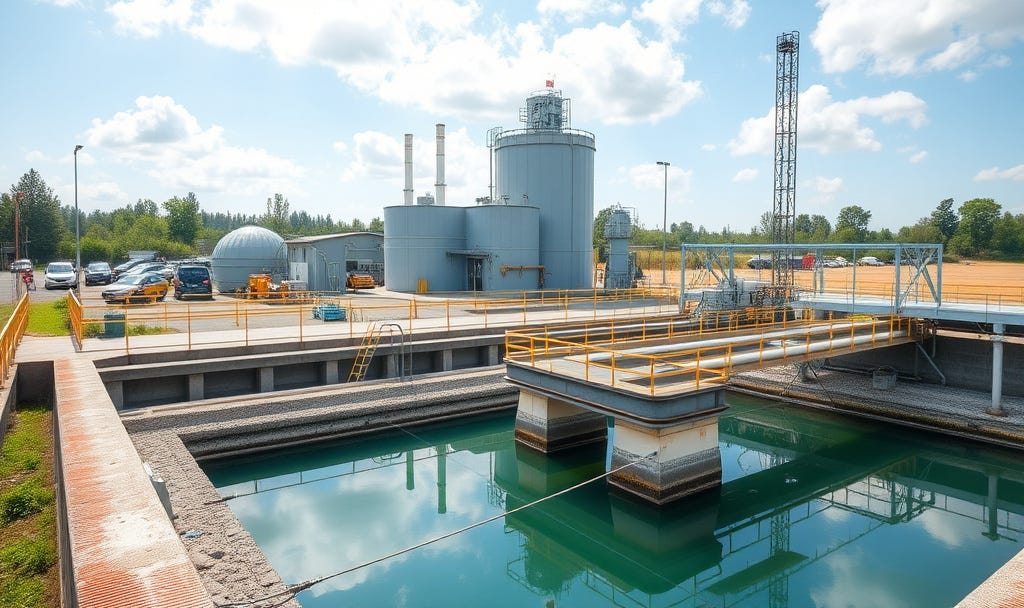
Chemical usage represents one of the most significant controllable expenses in both drinking water and wastewater treatment operations. Traditional dosing practices typically rely on static setpoints, operator experience, or delayed laboratory feedback. While effective, these approaches often result in conservative dosing strategies designed to maintain compliance under variable influent conditions. AI-driven control platforms continuously analyze real-time process data, including influent variability, turbidity trends, biological loading conditions, and downstream treatment performance. Machine learning models can then dynamically adjust chemical dosing rates to match actual treatment demand. Applications include optimization of -Coagulants and flocculants, Disinfection chemicals, Nutrient removal processes and pH adjustment systems.
Facilities implementing intelligent dosing systems frequently experience reductions in chemical consumption while simultaneously improving treatment consistency. Secondary benefits may include reduced sludge generation and lower chemical handling requirements. Even single-digit percentage reductions in chemical usage can translate into substantial annual savings for large facilities.
Energy consumption remains the dominant operating expense for many wastewater treatment plants, with aeration systems often accounting for nearly half of total facility energy demand. Biological treatment processes are inherently dynamic, responding continuously to changes in influent loading, temperature, and microbial activity. Conventional control strategies often operate blowers conservatively to avoid compliance risk, resulting in excess energy consumption. Artificial intelligence enables real-time optimization of dissolved oxygen control by continuously evaluating biological demand conditions. AI systems adjust aeration output dynamically rather than relying on fixed operational ranges. Documented operational benefits include: Reduced blower energy consumption - Improved nitrification and denitrification stability - Lower mechanical stress on equipment - Reduced greenhouse gas emissions.
Because aeration represents such a large share of operational energy use, optimization initiatives can generate immediate and measurable cost reductions.
Unplanned equipment failure remains one of the most expensive operational risks facing treatment facilities. Historically, maintenance strategies have followed either reactive repair models or fixed preventive schedules. Artificial intelligence introduces predictive maintenance capabilities by identifying early indicators of equipment degradation through continuous monitoring. AI platforms analyze parameters such as:
Vibration signatures
Pressure fluctuations
Flow irregularities
Motor performance trends
Historical failure patterns
Common assets benefiting from predictive analytics include pumps, blowers, membrane systems, and rotating equipment. By identifying failure risk before operational disruption occurs, facilities can schedule maintenance proactively, reducing emergency repair costs and minimizing downtime.
Unlike many emerging technologies requiring significant capital investment, AI implementation in water treatment often produces return on investment through operational expenditure reductions. Primary financial drivers include:
Lower chemical consumption
Reduced electricity usage
Fewer emergency maintenance events
Improved compliance stability
Extended equipment life cycles
Many utilities report operational savings sufficient to offset implementation costs within one to two budget cycles. This operational ROI profile is accelerating adoption across both municipal and industrial sectors.
Artificial intelligence does not eliminate the need for skilled operators or engineers. Instead, it enhances decision-making by providing improved system visibility and predictive insight. Successful facilities treat AI as decision-support infrastructure rather than autonomous control replacement. Operator expertise remains essential for interpreting recommendations, validating system behavior, and managing complex treatment scenarios. The combination of experienced personnel and intelligent analytics produces the strongest operational outcomes.
As sensor deployment, SCADA modernization, and digital monitoring continue expanding across utilities, AI-driven optimization is likely to transition from early adoption to industry standard practice. Facilities capable of leveraging operational data effectively will gain advantages in efficiency, resilience, and long-term asset sustainability. The question for many organizations is no longer whether artificial intelligence can reduce operational costs, but how rapidly integration can occur within existing infrastructure.
Water treatment has historically evolved through mechanical and chemical innovation. The next phase of advancement is increasingly digital. Artificial intelligence represents a practical pathway toward improving performance without large-scale infrastructure replacement — allowing facilities to operate smarter, more efficiently, and more sustainably. As adoption continues accelerating, AI-driven optimization may become one of the most significant operational shifts the water industry has experienced in decades.